
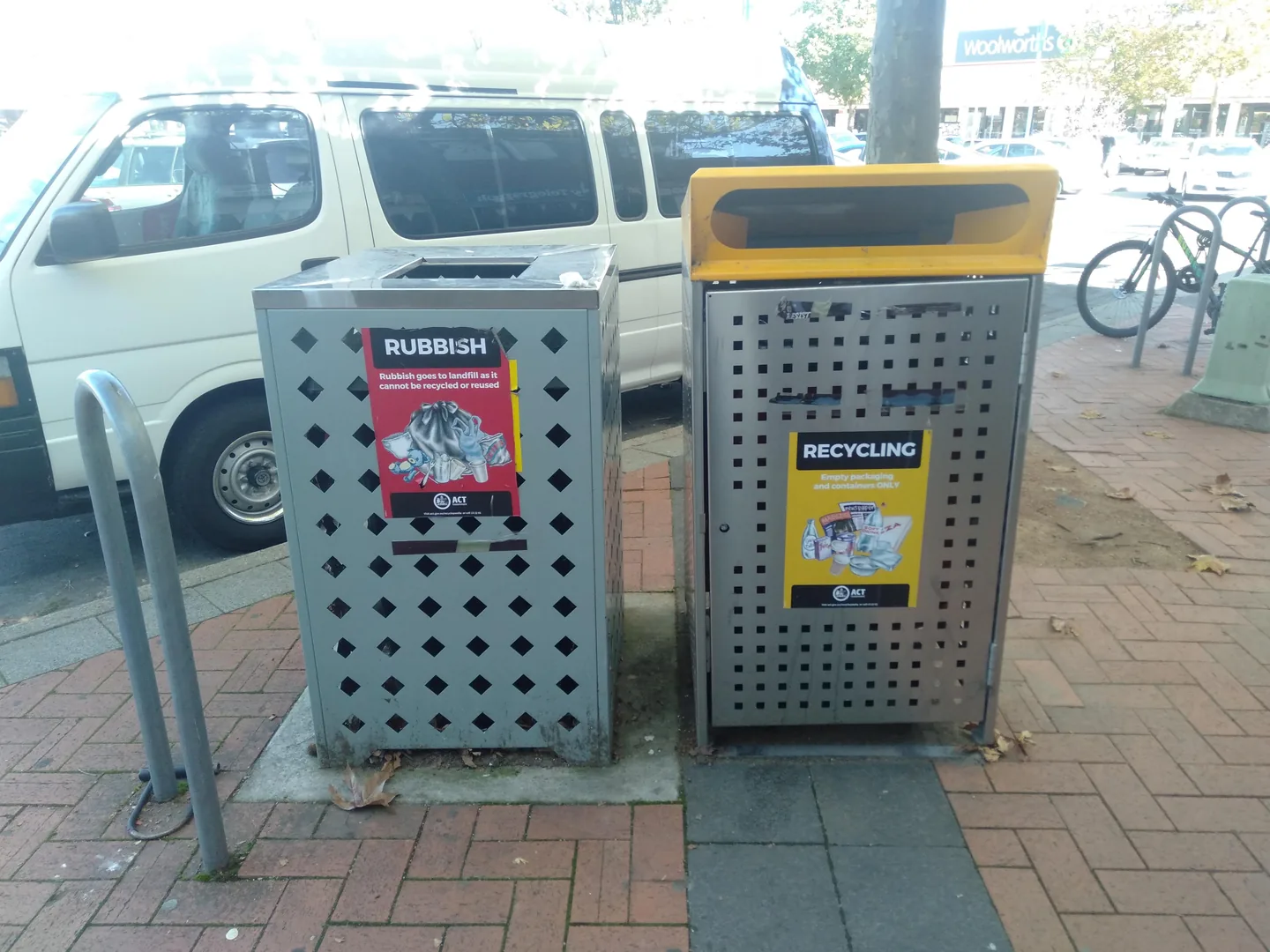
Most people spend fewer than three seconds deciding which bin receives their coffee cup or shipping wrapper. Designing your interior waste stations around human habits—rather than long policy memos—is what turns waste segregation from an aspiration into daily routine.
1. Never Place an Isolated Bin
If a hallway has only a recycling bin, people holding snack wrappers will toss trash into it. If a conference room has only a trash basket, aluminum cans will go to landfill. Every station in public corridors, breakrooms, and kitchens should pair General Trash and Recycling (plus Organics where food is served) side by side.
2. Use Restricted Lid Openings and Photographic Labels
Small visual friction makes a measurable difference. Slotted lids for paper, circular bottle/can holes for commingled containers, and clear photo-based labels showing actual building items ("empty bottle", "flattened box", "soiled napkin = trash") outperform text-only stickers every time.
3. Align Custodial Carts and Liner Colors
Even perfect sorting by office staff fails if evening custodial carts lack separate compartments or use identical black bags for everything. Pair clear liners with recycling stations, green/compostable liners with organics, and dark liners with trash—then train cleaning crews to empty each stream into its matching loading-dock bin.
Need help mapping stations and custodial workflows? Explore our Waste Consulting service.